
Andy employs UX Research & Design to uncover library user (and library staff) behaviour and needs to help organisations (chiefly higher education institutions and public libraries) to transform their services. He regularly leads intensive library building design consultancies and service transformation reviews. In 2021 his acclaimed and highly practical Handbook of User Experience Research & Design in Libraries was published.
Recent consultancies (2025-26)
– South Eastern Technological University: Carlow and Waterford: research into needs and behaviours of library users (and staff) leading to detailed building design recommendations ahead of refurbishment/investment. (February to March 2026; October to November 2026)
– University of York: research into academic publishing practice with a view to improving library open access and research support. (June to July 2026)
– Kingston University London: transformation of the Library and Learning Services department in response to user experience research and design. (July 2025 to January 2026)
What is User Experience research?
We can learn a huge amount about how our users experience (and feel about) services, spaces and products by adopting rich qualitative and quantitative research methods that come under the umbrella term ‘UX’ (User eXperience). Crucially UX research explores user behaviours and needs, not just what users say they want.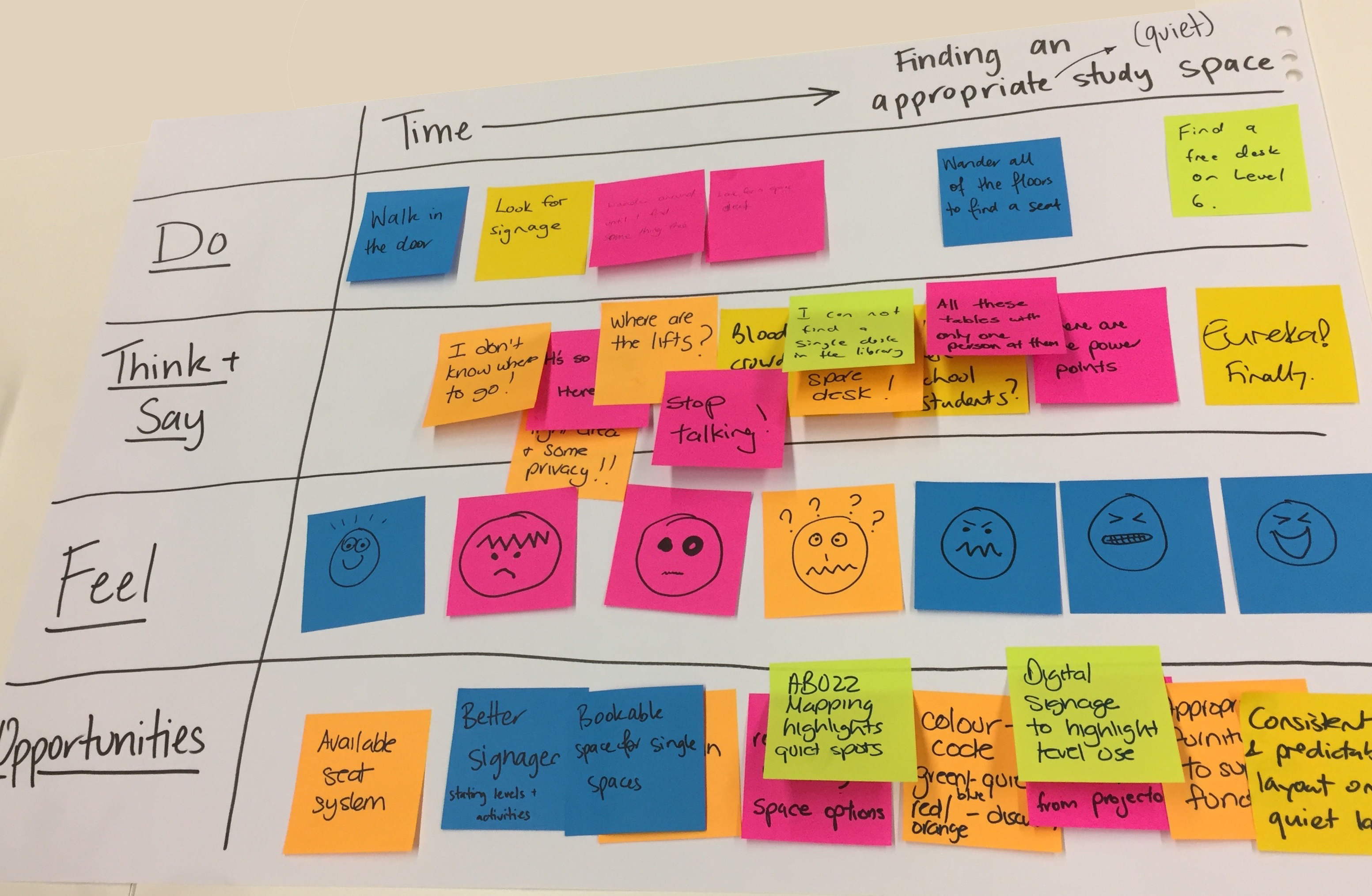
I show my clients how to supplement the usage and survey data that they have always taken with a range of invaluable behavioural and attitudinal methods which study and explore the real activities and experiences of their users. Crucially these methods are easy to use and low cost too.
What is User Experience Design?
User Experience Design is all about translating the data you have collected through UX research methods into new services and products to test. It involves mapping and analysing data, idea generation, and testing service prototypes. Too often we stop researching after we have collected data. We tend to just solve the easy problems, write a report that no-one reads, form a committee that takes no action, or do nothing at all. If you employ and embed a UX research and design process then you create the opportunity for real service and staff transformation.
Training courses:
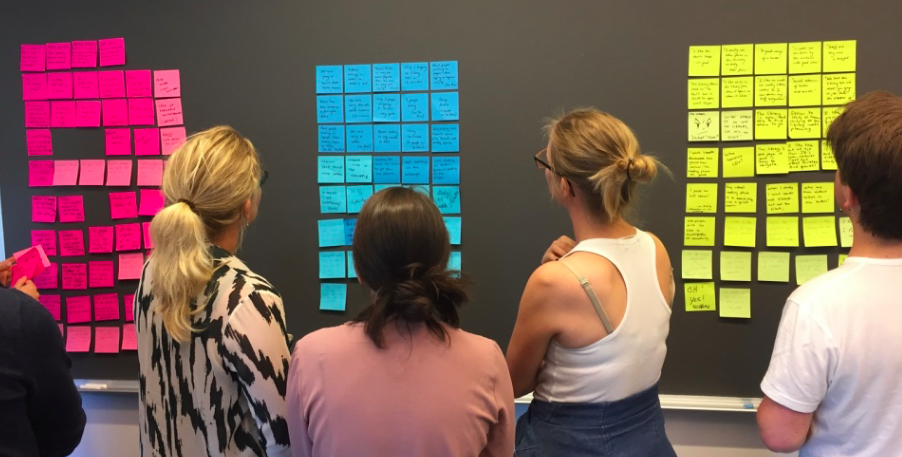
Typically he offers intensive courses on UX research and design over two or more days which are highly practical and immersive. These courses allows participants to put their learning into action immediately, exposing them to the practice of actual fieldwork with users, tangible data and real opportunities for service development.
Typical course content:
- What is UX research and design: definitions, purpose and value, applications
- Exploration of the key UX research techniques: observation, behavioural mapping, semi-structured interview, cognitive mapping, photo studies, user journey mapping, usability testing, cultural probes, card sorting, touchstone tours, love and break-up letters.
- Practical fieldwork: conducting of UX research techniques with real service users
- Mapping of data gathered from users through the fieldwork and identification of key service problems and priorities
- Successful idea generation in response to user data: ideas for new services, directions and products
- Planning and creating low-cost service prototypes (minimum viable products)
- Testing and iterating prototypes in situ with services users
- Evaluation of UX research and design process barriers and opportunities
Testimonials:
Libraries Tasmania (Australia):
‘I have never been part of training which had such a profound and positive effect on so many participants. You have left us with new skills, renewed enthusiasm and a belief that we can make a great impact on the quality of the programs and services we deliver to the public. Your humour was on point and the combination of theory, staff exercises and hands-on practical application was great. It was perfect timing for us as we try to create a strategy for our organisation that is more client centric.’
Brett Patterson, Director – Governance & Operations, Libraries Tasmania
Melbourne, La Trobe, RMIT and Deakin Universities (Melbourne, Australia):
‘Superb! I thought Andy was a warm, confident, humorous, and engaging speaker. UX in libraries is long overdue and I am delighted to see it now come to the forefront!!’; ‘Andy, thanks for a fabulous and thought provoking day of learning. Lots of practical stuff covered to put in our toolkits.’; ‘Awesome, full of energy and positive processes that I can take back and use.’; ‘Fantastic high energy creative and educational session. Top marks!!’.
House of Commons:
‘Very informative and enlightening, and really well presented’; ‘Really positive, informative session. I’m amazed by the different research methods, there is something in all of them that is valuable. Certain methods will be very easily applied and I’m really excited to implement them. Thank you for opening up a whole new world of qualitative feedback and research!’
Singapore Universities:
‘I feel very enlightened as well as excited about the ideas and tools I have learnt today. The session was fun, well-paced and full of very practical advice on how to get started’; ‘Kept me engaged throughout the day’; ‘Andy helped frame and package UX in the library context. Interactive and participatory – thank you!’
University of Salford:
‘A great way of sampling the UX methodologies’; ‘Lots of ideas to go and explore further. An engaging presenter with a good balance of interactive task ad presentations’.
University of Lancaster:
‘The UX event challenged all our assumptions and provided an entirely new way of looking at user experience. Through a combination of engaging presentation and hands-on activity we were introduced to a range of techniques that we could immediately take and apply to gain insight into the perceptions, experiences and behaviours of our users. With staff from all areas of our service attending there was something of value for everyone to take away. Our staff said “it was different to anything I have attended”, “incredibly helpful, thought provoking”, “a good blend of theory and activity”, “I feel motivated to carry ideas forward”, “genuinely inspiring and useful”, “a super day”, ” Inspired!”. Phil Cheeseman, Head of Academic Services, Lancaster University Library
Email Andy to find out more about his UX consulting and training so he can tailor his offering to your specific needs.


